Rebirthing is a connected breathing technique, continuous and without pauses between the inhale and the exhale, practiced lying down and accompanied by a guide. It was developed by Leonard Orr between the sixties and seventies, and it is one of the best-known roots of the connected breathing practiced today.
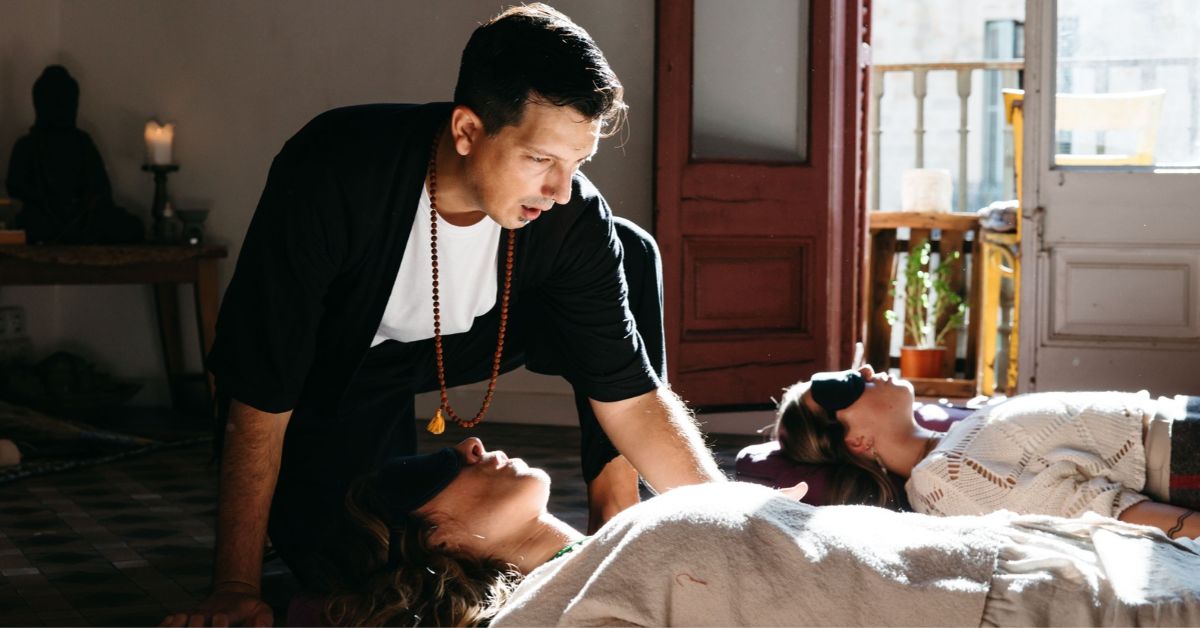
I’m Gonzalo and I guide connected breathing sessions in Barcelona and online. It’s a central part of my work, and it’s inspired by rebirthing, among other modalities. In this guide I’ll tell you where rebirthing comes from, what a classic session is like and how it differs from other practices, such as holotropic breathwork.
What is rebirthing breathwork?
You breathe through the mouth, continuously and in a circle: each inhale flows straight into the exhale, with no pause. It’s usually done lying down, in a one-to-one session with a guide who accompanies you. People who practice it describe heat, pressure, tingling, vibration and emotions that appear and move.
Origins of rebirthing: Leonard Orr
Leonard Orr developed the method and began presenting it as therapy in the seventies. The story goes that he relived his own birth in a bathtub, hence the name: rebirthing, being born again (source: GoodTherapy). His underlying idea is that birth leaves an imprint on the body and that breathing this way helps release stored tension.
From that technique other forms of connected breathing emerged, which is why several names are used today for similar things. I call it connected breathing, and when I’m referring to that inspiration I say rebirthing-style.
What is a rebirthing session like?
- Initial conversation: the guide asks about your goals and, if you know it, your history and your birth.
- Breathing: lying down, with connected breathing through the mouth, usually without music. It tends to last around an hour, with the guide present the whole time.
- Integration: you talk about what came up, to make sense of it and close the session calmly.
How long does a rebirthing session last?
A full session usually lasts about two hours. That’s the classic format. My work is inspired by that same breathing and takes it into other formats, which I describe below.
Rebirthing breathwork, connected breathing and holotropic breathwork: differences
All three use the breath to reach different states of consciousness, which is why they get mixed up. Here is what changes:
- Rebirthing. Usually one-to-one, lying down and with a guide, using connected breathing and a focus on birth.
- Connected breathing. The general name for breathing without pauses. The format and duration depend on who guides it, and rebirthing is one of its best-known forms.
- Holotropic breathwork. Done in a group, in pairs who take turns, with mandalas and sessions of about three hours, and it rests on Stanislav Grof’s framework. I cover it in my article on holotropic breathwork.
If you want the foundation of it all, I explain it in my guide to what breathwork is.
Rebirthing effects: what the research says
I found no controlled studies on rebirthing under that name, and the idea that we store a memory of our birth and can recover it has no scientific backing.
On connected breathing there is recent research, still preliminary: a waitlist trial, with six weekly 90-minute online sessions, measured a drop in anxiety symptoms compared with the control group (source: Research Square, preprint before journal publication).
And a 2023 meta-analysis on breathwork in general found small to moderate effects on stress, anxiety and depression, with few studies on fast breathing (source: PsyPost). What many people do describe is relaxation, intense sensations and emotions, and every experience is personal. That’s why I don’t promise results.
A 2023 review of high-ventilation breathing practices, the group connected breathing belongs to, raises their possible clinical use and calls for rigorous clinical trials, because the benefits are still hypothetical (source: Maastricht University).
Is rebirthing dangerous?
Breathing continuously can bring dizziness, tingling or cramps, similar to those of fast breathing. A guide teaches you to regulate them and stays with you if they happen.
Rebirthing contraindications
Connected breathing is not recommended, or calls for checking with a professional first, if you have:
- Aneurysm, cardiovascular problems or high blood pressure
- Epilepsy or a history of seizures
- Vision problems
- Osteoporosis
- Recent injuries or surgery
- Severe psychiatric symptoms, or strong medication
These lists vary depending on who guides the session, and they don’t replace your doctor’s opinion. If you have doubts about your case, check with them first.
Rebirthing in Barcelona: rebirthing-style connected breathing
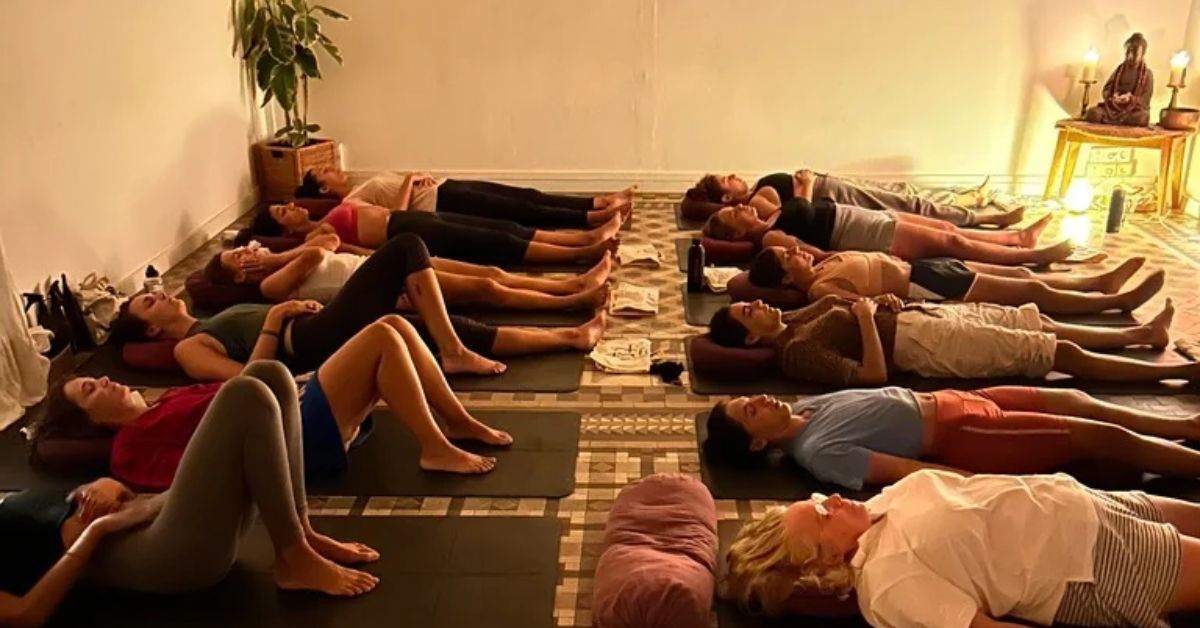
If you’re looking for rebirthing in Barcelona, what I guide is rebirthing-style connected breathing. My breathwork workshop in Barcelona is a 3-hour format in total: movement, connected breathing with music and a closing circle. It’s the best way to start, in a group and with support.
If you prefer individual work, you can book a private online breathwork session or a private session in Barcelona.